
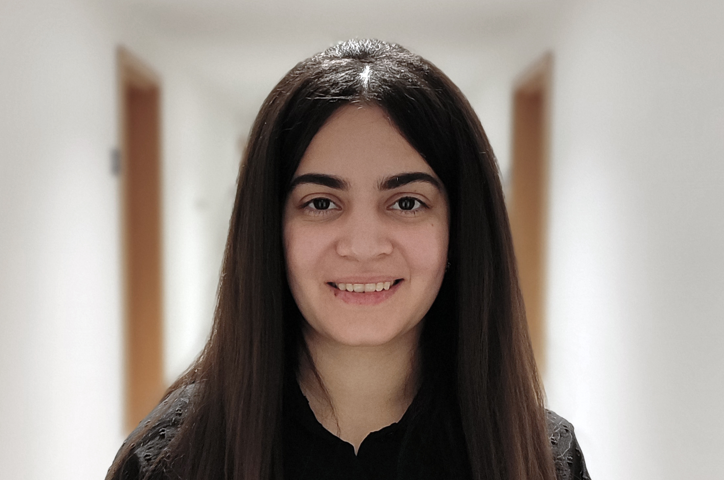
Mohrukh Talabkhuja
Country of Origin: Tajikistan
Degree: MSc, Agricultural and Resource Economics
Institution: University of Alberta
Country of Study: Canada
From Tajikistan’s mountains, Mohrukh believes a sustainable future depends on smart, inclusive economic planning. After studying Global Economics at the University of Central Asia, she pursued a Master’s in Agricultural and Resource Economics at the University of Alberta, deepening her focus on how development can advance without sacrificing environmental stewardship.
Her vision is shaped by lived realities at home: hydro-dependent communities face ecological risks, and rural families in some areas must buy trucked water that is stored for weeks in unsafe conditions. Mohrukh aims to apply rigorous economic models to water management, agriculture, and natural- resource governance, advocating for policies that promote intergenerational equity and long-term resilience for under-represented communities across Central Asia.
She says, “In my academic journey, I learned about the finite nature of natural resources and critical need for nations to diversify their economic foundations. We need to grasp the future risks associated with the depletion of non-renewable resources, which led me to focus on incorporating environmental preservation and intergenerational equity into economic analyses. I want to research areas of mindful management of depletable natural and renewable resources, and address agricultural and water issues in remote regions.
I believe that my homeland, Tajikistan, which relies primarily on hydroelectric power, needs to diversify its renewable energy sources to be better prepared for different future scenarios. This need is underscored by the fact that Tajikistan is a largely mountainous region, making it susceptible to hazardous incidents.
As I examined the environmental challenges faced by my region, I began to realize that I can use my Economics background to tackle environmental resource problems faced by remote areas. In my grandmother’s village, I experienced how my relatives purchased water from water delivery trucks to fill their wells. As this water often remains stagnant for extended periods of time, it poses significant health risks. Similarly, the absence of sustainable irrigation systems decreases crop yield or at times can risk crop failure due to unavailability of water, further worsening local peoples’ livelihood. I want to develop expertise and learn techniques that will help deal with these challenges.
I plan to explore the role of environmental resources in diverse economic contexts and identify ways for sustainable resource management to find optimal solutions to the issues that underprivileged communities face. Given my strong research interests in the complex and interconnected dynamics of economics and natural resources, I am confident that I will be able to make a positive impact at both the local and global levels as a future expert in the field of environmental economics.